







Marc Darrow, MD, JD.
Many people, or should we say many runners, will reach out to ask for information that may help them with their knee problems. Their knee problems maybe localized to the front of their knee, centralized to the area and coming from behind their knee cap. They will say they hear grinding noises, popping noises, and crunching noises coming out of that knee. These knee pain runners can be any age but are typically someone who has a lot of wear and tear damage in their knees. They will have an MRI on the knee that may be inconclusive of the grade of their problem and a recommendation for some type of arthroscopic knee clean up. Sometimes, the more athletic of these people will stop running and move over to cycling or swimming. The person who have a job that puts a lot of wear and tear on their knee will probably switch over to a bigger knee brace and worse, more medications to get them through their work day.
Patellofemoral Pain Syndrome is one of the most common problems we see in our new patients.
The patella is covered with a layer of smooth (articular) cartilage. This cartilage normally glides effortlessly across the knee during activities such as running or stair climbing, where bending the knee is involved in the activity.
In our office we see many people with patellofemoral pain, the wide sweeping nature of this problem has been confirmed by researchers who say patellofemoral pain is diagnosed in up to 7% of patients seeking medical care within the United States. Females experienced patellofemoral pain more often than males. The diagnosis of patellofemoral pain increased with age and the 50-59 year old age group had the most cases.(1)
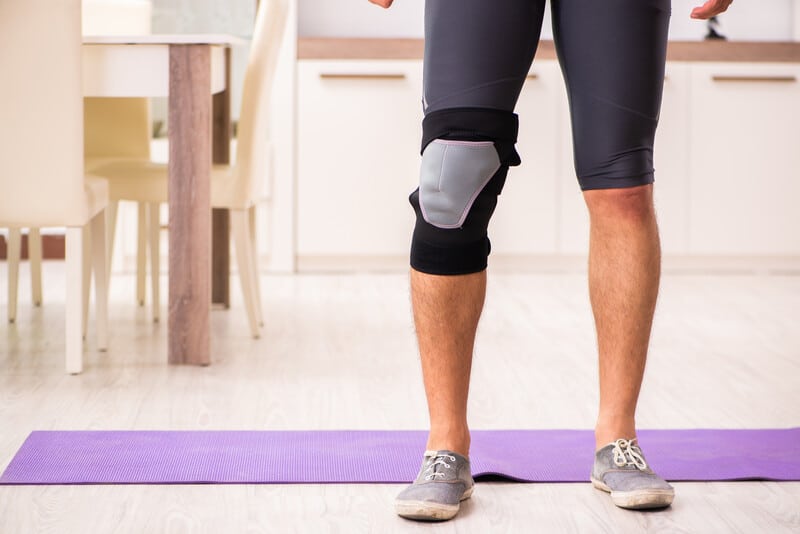
Why physical therapy may not work for patella related knee pain
We do see a number of patients who have tried the “full course” of physical therapy. Some patients experienced a lot of good. However, they did not get enough pain relief or functional improvement to continue on with their PT and are now exploring more options. But why didn’t the physical therapy help them?
A study from August 2020 (2) explains why physical therapy, while reducing pain, may not offer the help many people need.
“Patellofemoral pain is a common but challenging condition to manage. This is partly due to the various physical impairments along the entire lower extremity biomechanical chain (knee to ankle to foot), variables such as training errors, improper shoe wear or type of running surface, and possible central pain processing dysfunction. As high quality research and clinical practice guidelines assist in optimizing outcomes, the recurrence rate and functional impact of Patellofemoral pain syndrome remains high.”
When exercise may or may not help
In a December 2020 study (3), researchers evaluated the effects of a 12-week home exercise therapy program on pain, function and neuromuscular activity of the vastus medialis and vastus lateralis. Pain and function improved significantly after a home exercise therapy program in patients with patellofemoral pain syndrome. In addition, patients with a delayed onset or reduced activity of the vastus medialis compared to the vastus lateralis experienced a reduction in this imbalance.
If you have had a lot of knee pain you may be aware of the function and relationship between the vastus medialis and the vastus lateralis knee muscles and you may have been told that this imbalance between these muscles in what is causing your problem.
A March 2024 study (4) evaluated the effectiveness of somatosensory training (managing pain) and isometric exercises for pain, proprioception (sense of position / balance), and balance in runners with Patellofemoral pain syndrome.
- Eighty-five people made up the study.
- Isometric exercises and somatosensory training were given to every individual.
- Participants received 30-45 minutes of isometric exercises and 15 minutes of somatosensory training every four days.
- The result revealed significant improvement in Patellofemoral pain syndrome following the intervention. Both the isometric exercises and somatosensory training were found to be significant in reducing the intensity of the pain and improving the proprioception and balance of the individuals.
A study published in January 2026 (x) looked at how kinesiophobia connects with cognitive-behavioral factors, pain, and functional areas in people who have patellofemoral pain. This research was an observational, cross-sectional study that involved 66 participants suffering from patellofemoral pain. They were evaluated for cognitive-behavioral factors, their own reports of pain, knee-related function, and how well they could move. The analysis showed a strong negative link between self-efficacy and kinesiophobia. The findings of the study emphasize how complex kinesiophobia is. Improving self-efficacy might help lessen the avoidance caused by fear.
Photobiomodulation may help
The goal of a December 2025 systematic review (9) was to assess how effective photobiomodulation is for pain relief and improving function in people with Patellofemoral Pain Syndrome. The main outcomes measured were pain and function. A total of eight trials involving 340 participants met the criteria for inclusion. Photobiomodulation was found to significantly lower pain levels compared to the control group. Additionally, the functional outcomes showed a notable improvement in favor of photobiomodulation, even though there was considerable variability in the results. When photobiomodulation is used alongside exercise, it helps reduce pain and enhances knee function in those suffering from Patellofemoral Pain Syndrome. While the results indicate that photobiomodulation is a useful additional treatment, there is a need for standardized dosing guidelines and larger, high-quality studies to better inform future clinical practices.
Trigger points
A study published in December 2025 (x) looked at how trigger point dry needling and instrument-assisted soft tissue mobilization could help people with patellofemoral pain syndrome. This was a single-blinded, randomized controlled trial that included 102 participants aged 15 to 25 who had been diagnosed with this condition. The participants were split into four different groups: one group got trigger point dry needling, another group had instrument-assisted soft tissue mobilization, a third group received both treatments, and the last group was a control group. Each treatment group went through two sessions a week for four weeks, and all groups did a standard exercise program. The main outcome measured was the pressure pain threshold (PPT), and they also looked at pain scores at the beginning and after the treatments. The results showed that the group that received both trigger point dry needling and instrument-assisted soft tissue mobilization had the best improvements in both areas: their pressure pain threshold went up by 78%, and their pain scores improved by 39%.
Decreased hamstring strength and symptoms of knee osteoarthritis and patellofemoral pain
A July 2024 study (5) looked at the hamstring strength, flexibility, and morphology in individuals with gradual-onset knee disorders. In a data review of 79 papers with outcomes in patients with knee osteoarthritis, patellofemoral pain, chondromalacia patellae, and patellar tendinopathy, individuals with knee osteoarthritis presented with reduced hamstring strength compared to pain-free controls during isometric and concentric contractions. Individuals with patellofemoral pain presented with reduced hamstring strength compared to pain-free controls during isometric, concentric, and eccentric contractions. No differences were observed in individuals with patellar tendinopathy. The researchers suggest: “that assessing and targeting impairments in hamstring strength and flexibility during rehabilitation may be recommended for individuals with knee osteoarthritis or patellofemoral pain.”
Maybe it is not the patella causing pain in Patellofemoral pain syndrome
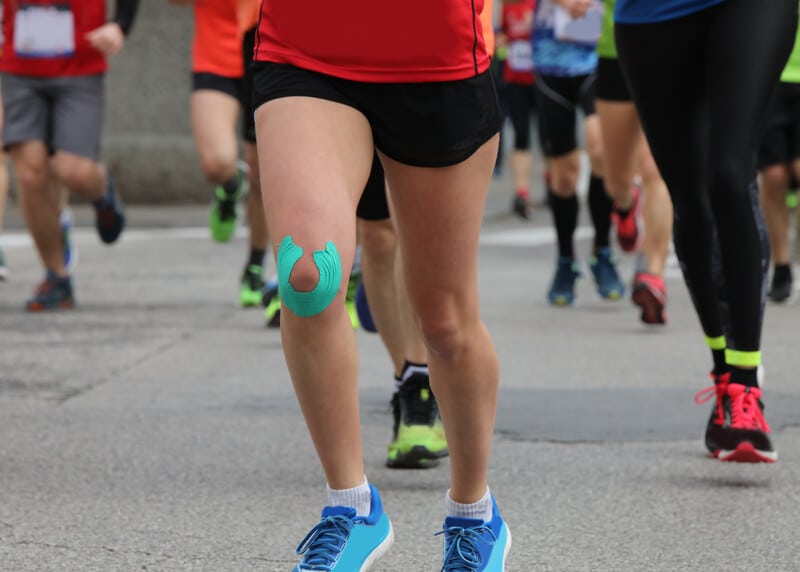
Another problem is the problem of accurate diagnosis. Knee pain is very complex. A July 2020 (6) study investigated the gait of participants with Patellofemoral pain syndrome before and after the application of Kinesio Tape in order to assess the impact of Kinesio Tape on cadence, stance time, and pain. While our study failed to demonstrate a significant difference in the gait of participants with Patellofemoral pain syndrome in comparison to those without Patellofemoral pain syndrome, we did demonstrate a significant reduction in pain after the application of Kinesio Tape. These results suggest other variables addressed by the Kinesio Tape may be causing the pain associated with Patellofemoral pain syndrome.
Joint hypermobility is a risk factor for patellar instability
In a May 2024 study, (11) researchers examined the relationship between joint hypermobility and patellar instability looking to see if joint hypermobility lead to an increased risk of patellar instability. In reviewing data from 18 studies (4,391 patients) the researchers found: “Joint hypermobility is a risk factor for patellar instability. Identification of at-risk groups may aid prevention of dislocations and allow for appropriate treatment. . . “
Further: Patients with Ehlers Danlos Syndrome (EDS) experience poor outcomes following patellar stabilization surgery, with post-operative monitoring required. with conflicting evidence regarding if hypermobile patients have worse outcomes than non-hypermobile patients following. Medial patellofemoral ligament reconstruction had a 19.1% failure rate in patients with Ehlers Danlos Syndrome (EDS).
Treatments for Patellofemoral Pain Syndrome
Bone marrow derived cell therapy is an injection treatment that may be used to treat many problems of the knee. This could include pain surrounding the knee cap or front of the knee. Stem cells are “de-differentiated pluripotent” cells, which means that they continue to divide to create more stem cells; these eventually “morph” into the tissue needing repair — for our purposes, collagen, bone, and cartilage.
Bone Marrow Aspirate Concentrate (BMAC) – Stem Cell Therapy – Grade III chondromalacia patellae
An April 2024 paper (7) presented the case of a 36-year-old male patient with Grade III chondromalacia patellae who was resistant to conservative treatment but was successfully treated with Bone Marrow Aspirate Concentrate (BMAC) therapy. At six and 12 weeks after therapy, the patient showed significant improvements in pain and functional results. This 36 year old man is a laborer performing strenuous weightlifting duties. He had a history of right anterior knee pain exceeding one year. The patient developed anterior knee pain as a result of a trauma, particularly a fall over a year ago.
He reported complaints of excruciating pain over the right knee for 1.5 years, limited range of motion, along with a giving away sensation of the right knee for four months. Following clinical (VAS: 8/10 pain reported as 8 out of 10), and poorer functional assessments, and finally imaging, the patient was diagnosed to have Grade III chondromalacia of the right patella.
After a few weeks of non-steroidal anti-inflammatory drugs (NSAID) use in addition to physiotherapy (PT), the anterior knee pain reduced in intensity. However, about six months preceding the last visit, the patient had a relapse of anterior knee pain. Standing, walking, and exercising increased the discomfort, while rest alleviated symptoms. Unlike before, conservative approaches, such as physiotherapy and NSAIDs, did not appreciably relieve the discomfort. Therefore, BMAC administration was attempted for this patient to facilitate enhanced recovery. “This case underscores the potential of Bone Marrow Aspirate Concentrate (BMAC) therapy as a promising treatment strategy for chondral defects, providing a minimally invasive option with satisfactory clinical outcomes.” The case doctors continue: “However, to validate the reliability and effectiveness of BMAC as a standard therapeutic strategy, larger clinical trials with extended follow-up and control groups are necessary.”
This above research is a single case history. Calls for more research have been ongoing.
A January 2020 (8) study from Loughborough University in the United Kingdom supports the use of bone marrow derived mesenchymal stem cells and calls for further large-scale studies to test the treatments overall effectiveness. The study authors wrote:
“Pre-clinical studies have demonstrated successful, safe and encouraging results for articular cartilage repair and regeneration (with intra-articular injections of bone marrow derived mesenchymal stem cells). This is concluded to be due to the multilineage differential potential, immunosuppressive and self-renewal capabilities of bone marrow derived mesenchymal stem cells, which have shown to augment pain and improve functional outcomes.”
PRP for Patellofemoral Pain Syndrome
PRP treatments involve collecting a small amount of your blood and spinning it in a centrifuge to separate the platelets from the red cells. The collected platelets are then injected back into the injured area to stimulate healing and regeneration. PRP puts specific components in the blood to work. Blood is made up of four main components; plasma, red blood cells, white blood cells, and platelets. Each part plays a role in keeping your body functioning properly. Platelets act as wound and injury healers. They are first on the scene at an injury, clotting to stop any bleeding and immediately helping to regenerate new tissue in the wounded area.
References:
1. Glaviano NR1 Kew M, Hart J, Saliba S. DEMOGRAPHIC AND EPIDEMIOLOGICAL TRENDS IN PATELLOFEMORAL PAIN. Int J Sports Phys Ther. 2015 Jun;10(3):281-90.
2 Jayaseelan DJ, Holshouser C, McMurray MW. FUNCTIONAL JOINT MOBILIZATIONS FOR PATELLOFEMORAL PAIN SYNDROME: A CLINICAL SUGGESTION. Int J Sports Phys Ther. 2020 Aug;15(4):643-649. PMID: 33354396; PMCID: PMC7735690.
3 Kölle T, Alt W, Wagner D. Effects of a 12-week home exercise therapy program on pain and neuromuscular activity in patients with patellofemoral pain syndrome. Archives of Orthopaedic and Trauma Surgery. 2020 Dec;140(12):1985-92.
4 Kochar SS, Fating T, Patil S. Efficacy of Isometric Exercises and Somatosensory Training for Pain, Proprioception, and Balance in Runners with Patellofemoral Pain Syndrome. Cureus. 2024 Mar;16(3).
5 Lopes HS, Waiteman MC, Priore LB, Glaviano NR, Bazett-Jones DM, Briani RV, Azevedo FM. There is more to the knee joint than just the quadriceps: A systematic review with meta-analysis and evidence gap map of hamstring strength, flexibility, and morphology in individuals with gradual-onset knee disorders. Journal of Sport and Health Science. 2023 Sep 3.
6 Kellish AS, Kellish P, Hakim A, Miskiel S, Shahi A, Kellish A. What Is the Effect on Kinesio Taping on Pain and Gait in Patients With Patellofemoral Pain Syndrome?. Cureus. 2020 Jul;12(7).
7 Soundharya V, Arthi R, Haran H, Kumar S, James S. Enhanced Bone Marrow Aspirate Concentrate (BMAC) Preparation Strategy in the Management of Chondromalacia Patella: A Case Report. Cureus. 2024 Apr 29;16(4).
8 Doyle EC, Wragg NM, Wilson SL. Intraarticular injection of bone marrow-derived mesenchymal stem cells enhances regeneration in knee osteoarthritis. Knee Surgery, Sports Traumatology, Arthroscopy. 2020 Jan 31:1-6.
9 Alayat MS, Sroge RA, Awali A, Fadil A, Malibari OB, Ajawi RH, Wali EN, Hafiz S, Yamani S. The Effectiveness of Photobiomodulation Therapy on Pain and Function in Patients with Patellofemoral Pain Syndrome—A Systematic Review and Meta-Analysis. Journal of Clinical Medicine. 2025 Dec 19;15(1):20.
10 Takla MK, Abdou Hegazy RG. Synergistic effect of dry needling and instrument-assisted soft tissue mobilization in patellofemoral pain syndrome: a randomized controlled trial. Journal of Manual & Manipulative Therapy. 2025 Dec 25:1-0.
11 Heighes LA, Lastoria DA, Beni R, Iftikhar A, Hing CB. The relationship between joint hypermobility and patellar instability: A systematic review. Journal of Orthopaedics. 2024 May 13.
12 Lopes HS, Waiteman MC, Priore LB, Glaviano NR, Bazett-Jones DM, Briani RV, Azevedo FM. There is more to the knee joint than just the quadriceps: A systematic review with meta-analysis and evidence gap map of hamstring strength, flexibility, and morphology in individuals with gradual-onset knee disorders. Journal of Sport and Health Science. 2023 Sep 3.
13 Leite OH, Navarro GJ, Rodrigues NL, de Paula Gomes CA, Barton GJ, Vallio CS, Lucareli PR. Pain, fear, and movement: Cognitive-behavioural connections in patellofemoral pain. Clinical Biomechanics. 2025 Nov 22:106716.