







Marc Darrow, MD
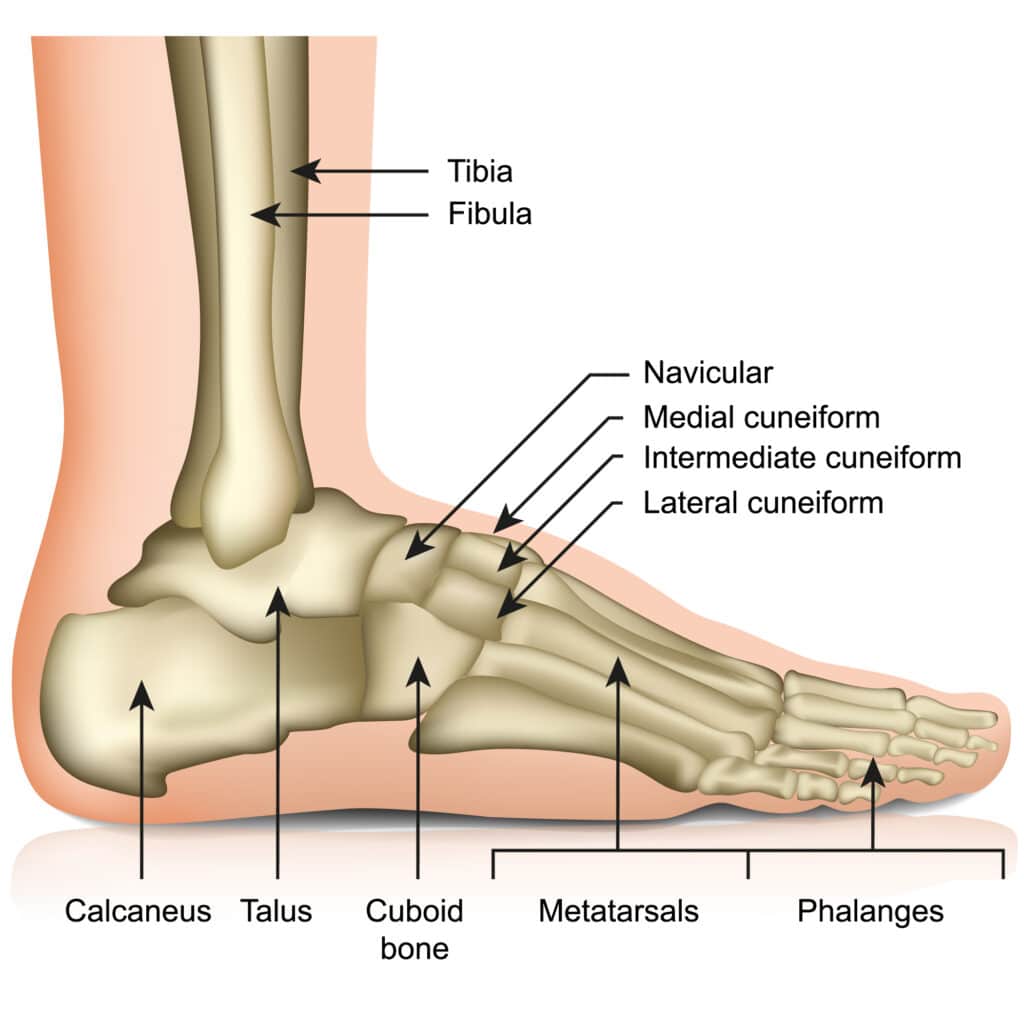
Pain in the ball of the foot can have several causes, but one important source is lesser metatarsophalangeal (MTP) joint instability. These are the joints at the base of the smaller toes, where the toes meet the long bones of the forefoot. When these joints become unstable, people may notice pain under the forefoot, swelling, a feeling of walking on a small stone, toe drifting, or changes in the shape of the toe over time.
A major structure involved in this problem is the plantar plate, a strong supportive tissue on the bottom of the joint. When the plantar plate becomes stretched, weakened, or torn, the toe can gradually lose support and begin to shift out of its normal position (2).
Why this problem can get worse over time
Current research suggests that lesser MTP instability is often more than a simple inflammation problem. It is usually a mechanical stability problem, meaning the structures that help hold the toe in place are no longer doing their job well enough. Over time, this can lead to pain, deformity, and in some cases even partial or complete dislocation of the toe joint (1)(2).
This is one reason early recognition matters. What starts as forefoot pain may later become toe deviation, loss of toe grip, crossover toe, or a joint that feels unstable when walking (2).
Can conservative care help?
Conservative care can still be very helpful, especially in the earlier stages. Common nonsurgical treatments include:
- shoe modification
- activity modification
- taping or splinting
- metatarsal padding
- custom orthotics
- anti-inflammatory medication
These approaches may reduce pressure under the forefoot and make walking more comfortable. However, newer reviews suggest that while conservative care often helps symptoms, it may be less reliable at stopping the progression of deformity once true instability is already present (1).
That does not mean these treatments are not worthwhile. It means they may be most effective for pain relief and support, rather than as a complete fix for a plantar plate injury that has already led to mechanical instability.
Metatarsal pads may reduce pressure under the metatarsal heads
A newer study on people with chronic metatarsalgia found that medially wedged foot orthoses combined with a metatarsal pad may reduce pressure under the metatarsal heads and improve foot and ankle biomechanics more effectively than standard orthoses (3).
This is encouraging because reducing overload under the forefoot is an important treatment goal. Still, it is important to be realistic about what orthotics can and cannot do. They may improve comfort and function, but they do not necessarily reverse a plantar plate tear or fully restore joint stability in more advanced cases (3).
PRP: a newer option getting more attention
One treatment receiving more attention is platelet-rich plasma (PRP). PRP uses a concentration of the patient’s own platelets, prepared from a blood sample and injected into an injured area with the goal of supporting healing.
A 2024 retrospective study looked at 13 patients who received PRP injections for plantar plate injuries. The results were encouraging. Patients reported meaningful improvement in both pain and function over an average follow-up of about 22 months. Pain scores improved, function scores improved, there were no reported complications, and the study reported a high rate of return to sport among active patients (7).
This makes PRP an important treatment to mention in an updated discussion of plantar plate injuries and lesser MTP instability. However, the current evidence is still early. The study was small and retrospective, which means it cannot yet prove that PRP consistently restores joint stability, prevents deformity progression, or replaces the need for surgery in more advanced cases (7).
PRP may help pain and function in selected patients with plantar plate injury, but it is not yet a proven stand-alone solution for every case of MTP instability.
What about mesenchymal stem cells?
There is also growing public interest in mesenchymal stem cells, sometimes called mesenchymal stromal cells, for orthopedic problems. In theory, these treatments may help tissue repair. But when it comes to lesser MTP instability or plantar plate injury, there is currently very little direct clinical evidence showing that stem cell treatment reliably heals the plantar plate, restores joint stability, or prevents worsening toe deformity.
For patients, the most important takeaway is simple: PRP has some early condition-specific research behind it, while stem cell therapy for this problem remains largely unproven.
Because of that, patients should be cautious about claims that stem cells can fully regenerate the plantar plate or cure lesser MTP instability. At this point, the published evidence does not strongly support those claims.
When surgery may need to be considered
If the toe continues to drift, becomes dislocated or nearly dislocated, or if pain continues despite well-planned conservative care, surgery may become part of the discussion. In many of these cases, the goal is to correct the underlying mechanical problem rather than just reduce symptoms.
A 2024 study comparing two surgical approaches for metatarsalgia and severe instability of the lesser MTP joints found better outcomes when triple Weil osteotomy was combined with direct plantar plate repair than when triple Weil osteotomy was combined with fusion of the proximal interphalangeal joint. The group that had direct plantar plate repair had a notably higher rate of good results (5).
This supports an important idea in foot surgery: when the plantar plate is a major part of the problem, directly addressing it may lead to better outcomes than procedures that change alignment without repairing the main stabilizing structure (5).
A word of caution about steroid injections
Steroid injections are sometimes used for painful forefoot conditions, but they should be considered carefully in the setting of joint instability. Earlier conservative management literature suggests that some patients had symptom relief after steroid injection, but progressive deformity still developed in a number of cases (1).
In other words, pain may improve even while the structural problem continues. That is why treatment decisions should focus not only on pain relief, but also on whether the joint is becoming more unstable over time.
Summary
Lesser MTP instability is often a progressive condition related to plantar plate injury and joint instability, not just a temporary pain problem (1)(2).
Conservative care remains important and may improve comfort, especially early on. Orthotics, metatarsal pads, taping, and shoe changes can all play a useful role. PRP is a newer option with encouraging early results, especially for pain and function in plantar plate injuries, but the research is still limited (3)(7). Mesenchymal stem cell therapy, by contrast, does not yet have strong direct evidence for this condition.
For patients with worsening deformity, persistent instability, or failure of conservative treatment, surgery remains the most established option, especially when the procedure directly addresses the plantar plate (5).
With nearly three decades of experience, Dr. Marc Darrow and his team are pioneers in regenerative treatments, offering expert insights and personalized care for chronic pain.
Schedule a free phone consultation today and receive our exclusive Regenerative Medicine Stem Cell & PRP Quick Start Guide —a digital resource packed with:
- Insights into Stem Cell & PRP Therapy
- Research-backed treatments for chronic tendon injuries, joint pain, arthritis, and sports injuries
Take the first step toward a pain-free, active life today.
Call for a free phone consultation with our staff 800-300-9300
References
1 Li CC, Lui TH. Lesser Metatarsophalangeal Joint Instability: Arthroscopic Treatment Alternatives. Foot and Ankle Clinics. 2024 Dec 1;29(4):727-39.
2 Ayoola AS, Jastifer JR. Metatarsophalangeal Joint Instability: Anatomy and Physiopathology. Foot and ankle clinics. 2024 Dec 1;29(4):681-90.
3 Payen E, Acien M, Isabelle PL, Turcot K, Begon M, Abboud J, Moisan G. Impact of different foot orthoses on gait biomechanics in individuals with chronic metatarsalgia. Gait & Posture. 2025 Jan 21.
4 Althoff AD, Ramamurti P, Vennitti C, Kamalapathy P, Park JS, Werner BC, Cooper MT. Preoperative Risk Factors for Primary Metatarsophalangeal Arthroplasty Revision to MTP Arthrodesis for Hallux Rigidus. Foot & Ankle International. 2022.
5 Bobrov DS, Rigin NV, Lychagin AV, Artemov KD, Slinjakov LJ, Kachesov AV. Surgical Treatment of Metatarsalgia and Severe Instability of Lesser Metatarsophalangeal Joints. The Journal of Foot and Ankle Surgery. 2023 Sep 14.
6 Shima H, Togei K, Hirai Y, Yasuda T, Okuda R, Neo M. Operative outcomes of hallux valgus with painful osteoarthritis of the lesser tarsometatarsal joints. Journal of Orthopaedic Science. 2022 Dec 21.
7 Samsonov AP, Butler JJ, Kennedy JG. Excellent Outcomes Following the Use of Platelet-Rich Plasma for Plantar Plate Injuries: A Retrospective Review. Foot & Ankle Orthopaedics. 2024.