







Marc Darrow, MD, JD.
PRP treatments involve collecting a small amount of your blood and spinning it in a centrifuge to separate the platelets from the red cells. The collected platelets are then injected back into the injured area to stimulate healing and regeneration. PRP puts specific components in the blood to work. Blood is made up of four main components; plasma, red blood cells, white blood cells, and platelets. Each part plays a role in keeping your body functioning properly. Platelets act as wound and injury healers. They are first on the scene at an injury, clotting to stop any bleeding and immediately helping to regenerate new tissue in the wounded area.
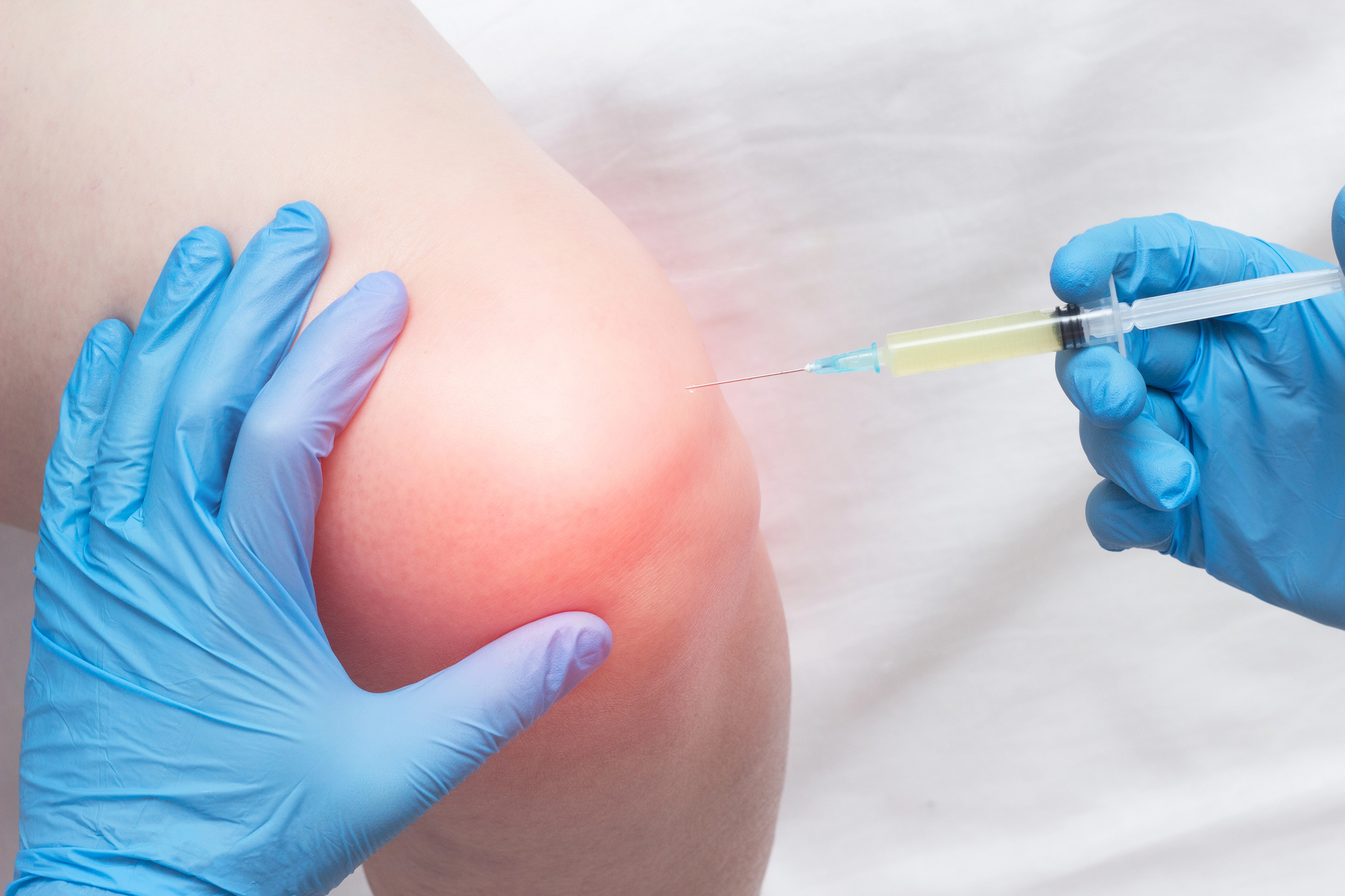
A September 2025 study (1) looked at the evidence for how effective (both clinical and radiological) and safe PRP is for patients with Patellofemoral osteoarthritis, chondromalacia patellae, and anterior pain (in the front of the knee). Included was data from five studies with a total of 146 patients. This systematic review suggests that getting injections of platelet-rich plasma into the joint, whether by itself or along with hyaluronic acid or stem cells, can help reduce pain and improve clinical outcomes for patients who have chondromalacia patellae and Patellofemoral Arthritis. Even though the studies varied in design, the groups of people studied, and how PRP was prepared, there was a clear trend showing that patients benefited clinically. The evidence we have suggests that using proper measures for pain and function can lead to significant improvements after getting PRP treatment.
A study from Turkey (2) did test the effectiveness of PRP for Patellofemoral pain syndrome. This is what the study found.
“Patellofemoral pain syndrome is the most common problem in musculoskeletal system. Platelet-rich plasma (PRP) has been suggested to be beneficial in the treatment of sports injuries. The purpose of this study is to compare single and triple PRP injections in the treatment of Patellofemoral pain syndrome and to show whether or not triple application of PRP injection may be more effective.
- A total of 30 patients with Patellofemoral pain syndrome for more than 3 months, with age of 20 to 35 years, were included in this study.
- The patients were divided into three groups as single injection application group (number=20) or triple injection application group (n=10) and the unaffected opposite knees were used as controls (number=30). 2 mL of PRP injected into the knee joints.
- In triple injection group the injections were done a month apart. All patients received a six-week standard exercise program.
- Results: Among the patients with PFPS treated with an exercise program, a triple PRP injection compared with a single PRP injection did not result in greater improvement in knee functions, balance and proprioception, isokinetic muscle strength and endurance during a 4-month follow-up.”
In this study one injection of PRP was found to provide similar healing as three injections of PRP given at one month intervals. In our practice we too have seen where one treatment of PRP would be enough for many patients but not all patients. In this study group this was a younger, already active group who tended to heal faster. Realistically some people with a more advanced denegation would require a more comprehensive treatment. Sometimes one treatment will be enough.
A May 2024 study (3) examined possible causes of pain in the front of the knee focusing on chondromalacia patellae. The objective of this study, according to the researchers, “is to investigate the effect of injectable PRP on patients with anterior knee pain in absence of altered patellofemoral joint anatomy.”
- 43 patients with anterior knee pain were recruited to participate in this non-randomized controlled trial, 28 patients in the injection group and 15 in the only-physiotherapy group.
- While the 28 patients in the experimental group received three PRP injections and one injection of hyaluronic acid (HA), comparators received the standard physical therapy regimen.
- Although an improvement was seen in both groups, a statistically significant difference favoring the injection of PRP over the physiotherapy-only group was observed.
- The superiority of outcomes in the injection group was observed at 3 and 6 months after the initial diagnosis was made. Furthermore, the results of this study revealed a significant improvement at 3 and 6 months when compared to baseline measures.
- This study “affirm(s) the positive effects of PRP and HA for the treatment of anterior knee pain described by previous research and the subsequent improvement of the quality of life.”
References
1 Chalidis B, Pitsilos C, Davitis V. The Role of Platelet-Rich Plasma (PRP) in the Treatment of Patellofemoral Arthritis and Anterior Knee Pain: A Systematic Review. International Journal of Molecular Sciences. 2025 Sep 16;26(18):9006.
2 Orscelik A, Yildiz Y. Comparison of single and triple platelet rich plasma injections in the treatment of patellofemoral pain syndrome. Turkiye Klinikleri Journal of Medical Sciences. 2015;35:78-87.
3 Ostojic M, Hakam HT, Lovrekovic B, Ramadanov N, Prill R. Treatment of anterior knee pain due to chondromalacia patellae with platelet-rich plasma and hyaluronic acid in young and middle-aged adults, a cohort study. Arch Orthop Trauma Surg. 2024 May 23.