







A December 2025 case history (1) from the Department of Graduate Studies, Canadian Memorial Chiropractic College discussed the non-surgical treatment of a partial ulnar collateral ligament (UCL) tear. The athlete managed to get back to performance training in just six weeks.
The patient was a 29-year-old professional running back who sought help from a sports specialist chiropractor for post-injection care after suffering a grade 2 partial tear of his right UCL. This injury was treated with ultrasound-guided platelet-rich plasma (PRP) and stem cell injections. During the physical exam, it was found that he had limited elbow range of motion (ROM) and positive orthopedic tests confirmed the UCL injury. The patient mentioned that he had attempted some light isometric exercises but hadn’t returned to strength training since the injection.
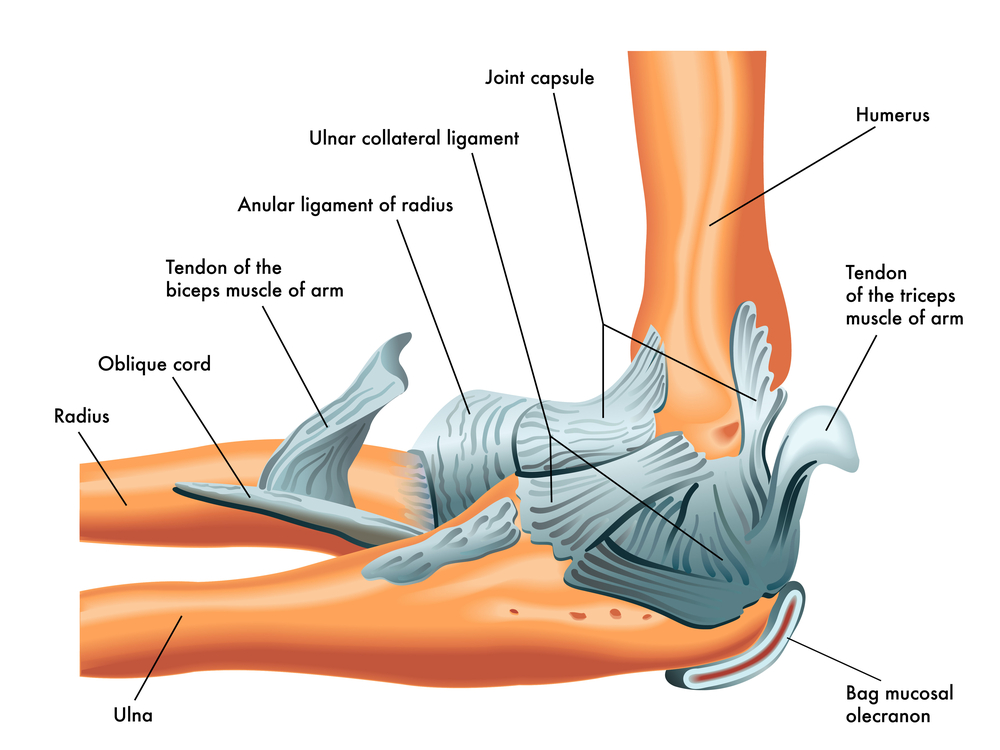
The treatment plan involved a combination of chiropractic care, which included active release therapy (ART), electroacupuncture, and rehabilitation exercises. The patient showed improvement in strength and function without needing surgery, highlighting the potential of biologic injections as a non-surgical treatment option when combined with multimodal care to speed up recovery from UCL injuries in elite athletes. More research is necessary to explore the advantages of using a combination of traditional rehabilitation, PRP, and MSC for ligament healing time and return to performance. This will help sports clinicians develop the best rehabilitation strategies to assist athletes in returning to play effectively.
A study published in the Orthopaedic Journal of Sports Medicine in January 2026 (2) challenges the common belief that UCLR (Tommy John) surgery creates a new ligament that is better than the original one. The analysis, which looked at data from 153 specimens across 10 different biomechanical studies, showed that the reconstructed ligament is not as strong as the natural, intact ligament.
A study conducted in October 2025 (3) examined baseball pitchers between the ages of 15 and 19, a demographic that experiences a higher incidence of ulnar collateral ligament reconstruction, commonly referred to as Tommy John surgery, compared to other age groups. Recent findings among elite pitchers indicate that the average age at which they undergo their first ulnar collateral ligament reconstruction is decreasing. Nevertheless, there is limited research on how early-career UCL-R impacts the career trajectories of top pitchers, including their performance, longevity in the sport, and financial earnings. This study aimed to investigate the effects of undergoing ulnar collateral ligament reconstruction at a younger age on these pitchers’ professional paths, with a focus on their performance, career duration, and income. The researchers found that pitchers who had the surgery at a younger age experienced significantly longer recovery times before returning to play (at any level) after their initial reconstruction, in comparison to those who had the surgery later in their careers, such as 15-year-olds versus 20-year-olds.
References
1 Lane N, Rees GA, D’Angelo K. Platelet-Rich Plasma (PRP)/stem-cell therapy for a partial torn ulnar collateral ligament in a professional football player: case report. J Can Chiropr Assoc. 2025 Dec;69(4):414-424. Epub 2025 Dec 30.
2 Looney AM, Hanna AJ, Coladonato C, Sonnier JH, Bodendorfer BM, Anderson CG, Sarna N, Freedman KB, Ciccotti MG, Ciccotti MC, Erickson BJ. Elbow Ulnar Collateral Ligament Reconstruction and Repair: A Systematic Review and Meta-analysis of Biomechanical Studies. Orthopaedic Journal of Sports Medicine. 2026 Jan;14(1):23259671251407657.
3 Kriz PK, Staffa SJ, Kriz JP, Kocher MS. Early-career ulnar collateral ligament reconstruction in elite baseball pitchers: impact on professional career performance, longevity, and earning potential. JSES international. 2025 Oct 15.